

This 15-minute Vegan Pie Crust is easy to make by hand or in a food processor with only 6 ingredients! Flaky, tender, and delicious, no one will guess it’s completely free of butter or animal products.
Use this pie crust for my Vegan Pumpkin Pie, my Amazing Vegan Pecan Pie, my Vegan Coconut Cream Pie, and more!
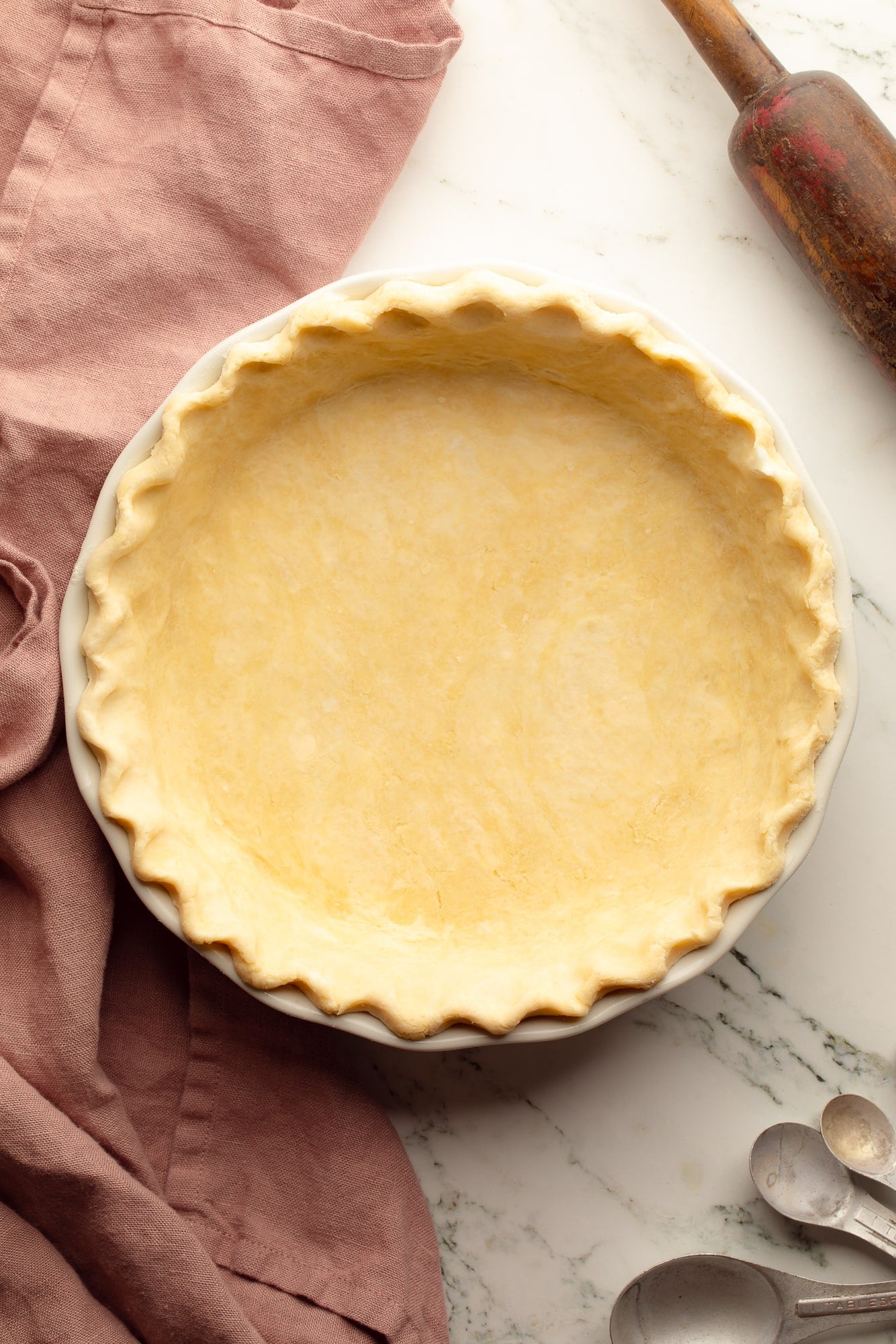
This is the only Vegan Pie Crust recipe you’ll ever need. It’s easy to make with 6 simple ingredients and perfect for all your baking needs! Make it by hand or in a food processor—both methods are incredibly easy to follow.
I know that making pie crust can seem intimidating, especially for beginners, but as long as you follow my step-by-step instructions and helpful tips, you shouldn’t have any problems! This is the best pie crust for any pie recipe, like this holiday-ready Vegan Sweet Potato Pie, this Vegan Lemon Meringue Pie, and even this Vegan Pot Pie.
⭐⭐⭐⭐⭐
“I made this crust and it was the best tasting flaky crust I’ve ever had! This will always be my “go-to” crust now!” – Julie
Why you’ll love this vegan pie crust recipe
- Actually easy to make – There are 2 ways to make this pie crust: (1) by hand and (2) in a food processor. Both are easy, fast, and foolproof.
- Flaky, buttery perfection – I’ll show you how to make a vegan pie crust that’s as tender, flaky, and buttery as the classic version.
- Great for all pies – Whether you’re baking a vegan apple pie, a vegan banana cream pie, or even a vegan quiche, THIS is the pie crust recipe you’ll want for the base.
How to make vegan pie crust
Find the complete printable recipe with measurements below in the recipe card.
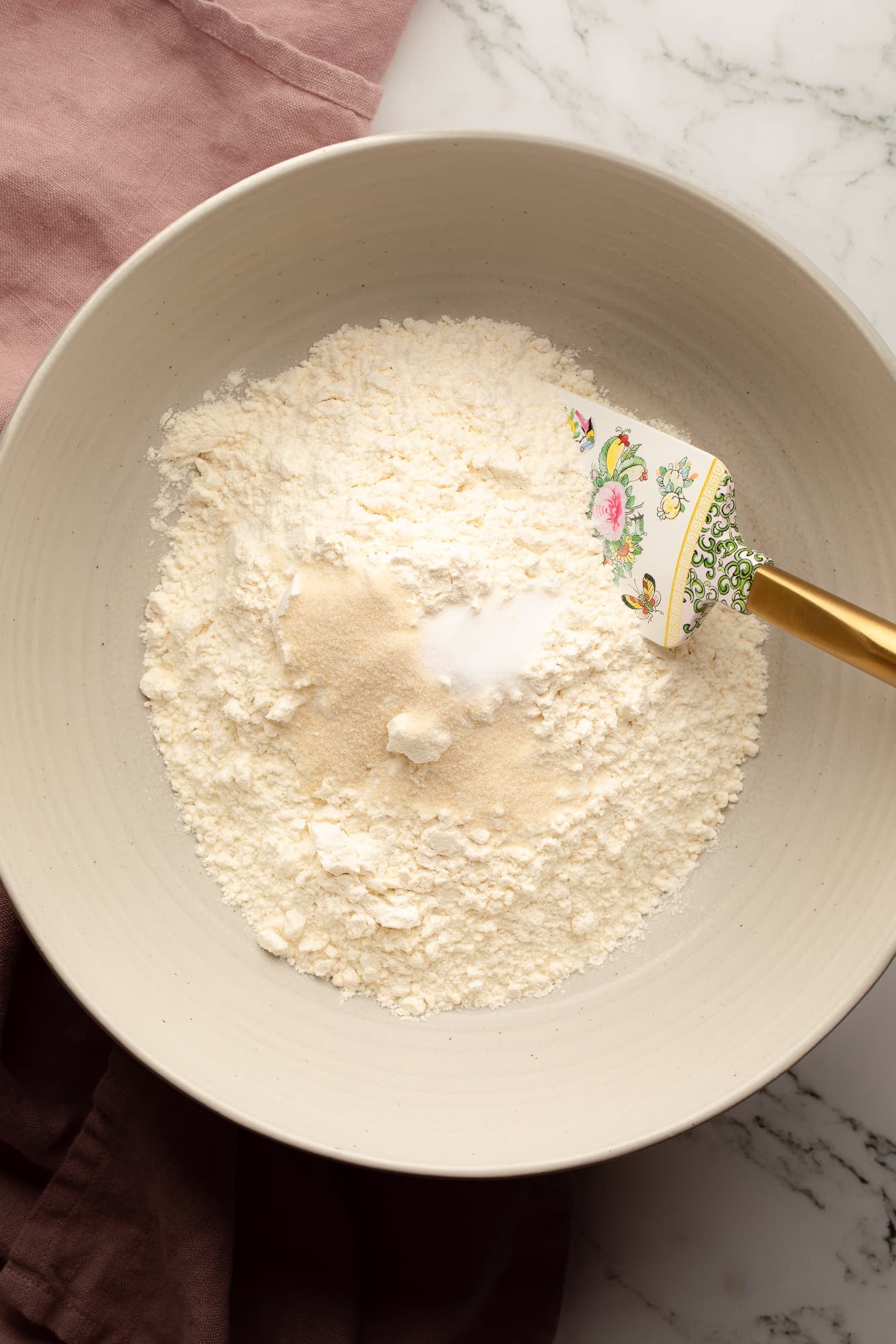
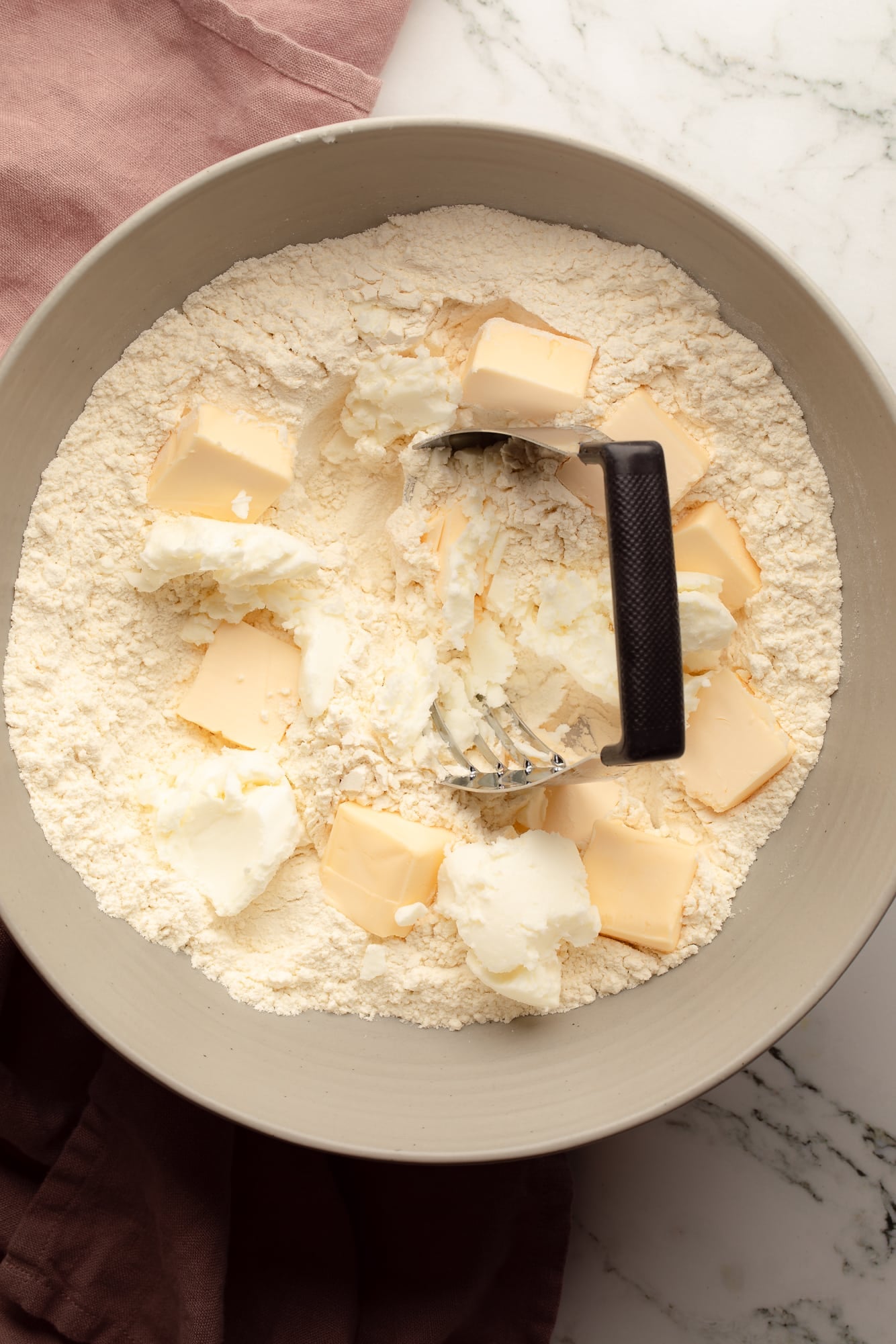
Whisk the flour, sugar, and salt together in a large bowl. Cut the cold vegan butter and shortening into the dry ingredients with a pastry cutter or fork.
Keep your butter and shortening cold
I always pre-measure my butter and shortening, then keep them in the refrigerator until it’s time to make the pie crust. You can even place the butter in the freezer for 15-30 minutes before using, but keep the shortening in the refrigerator. The cold fat is key to achieving a tender, flaky pie crust, so don’t skip this part!
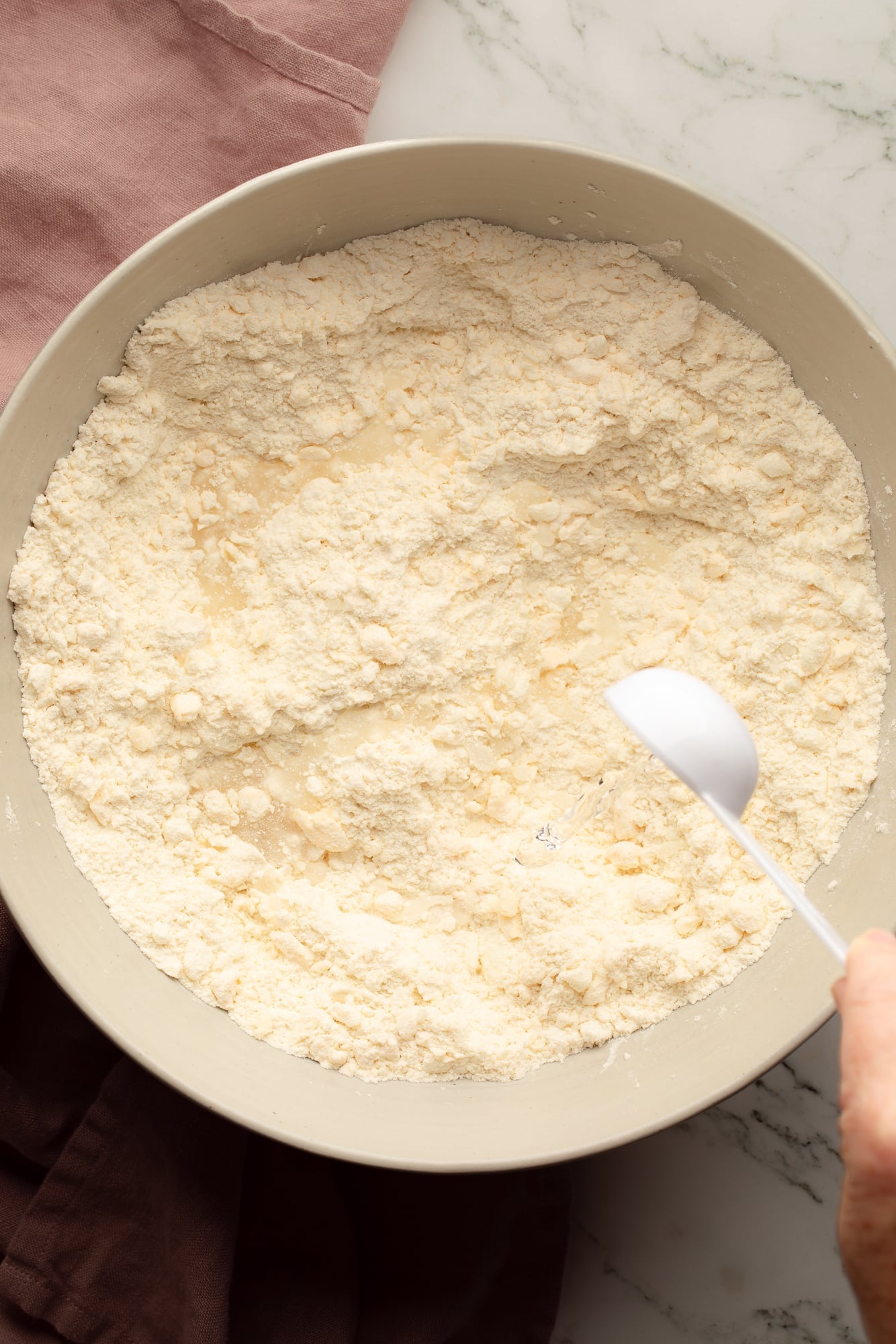
Slowly drizzle in the ice water (1 to 2 tablespoons at a time), gently stirring between every addition, until it looks coarse but clumps together.
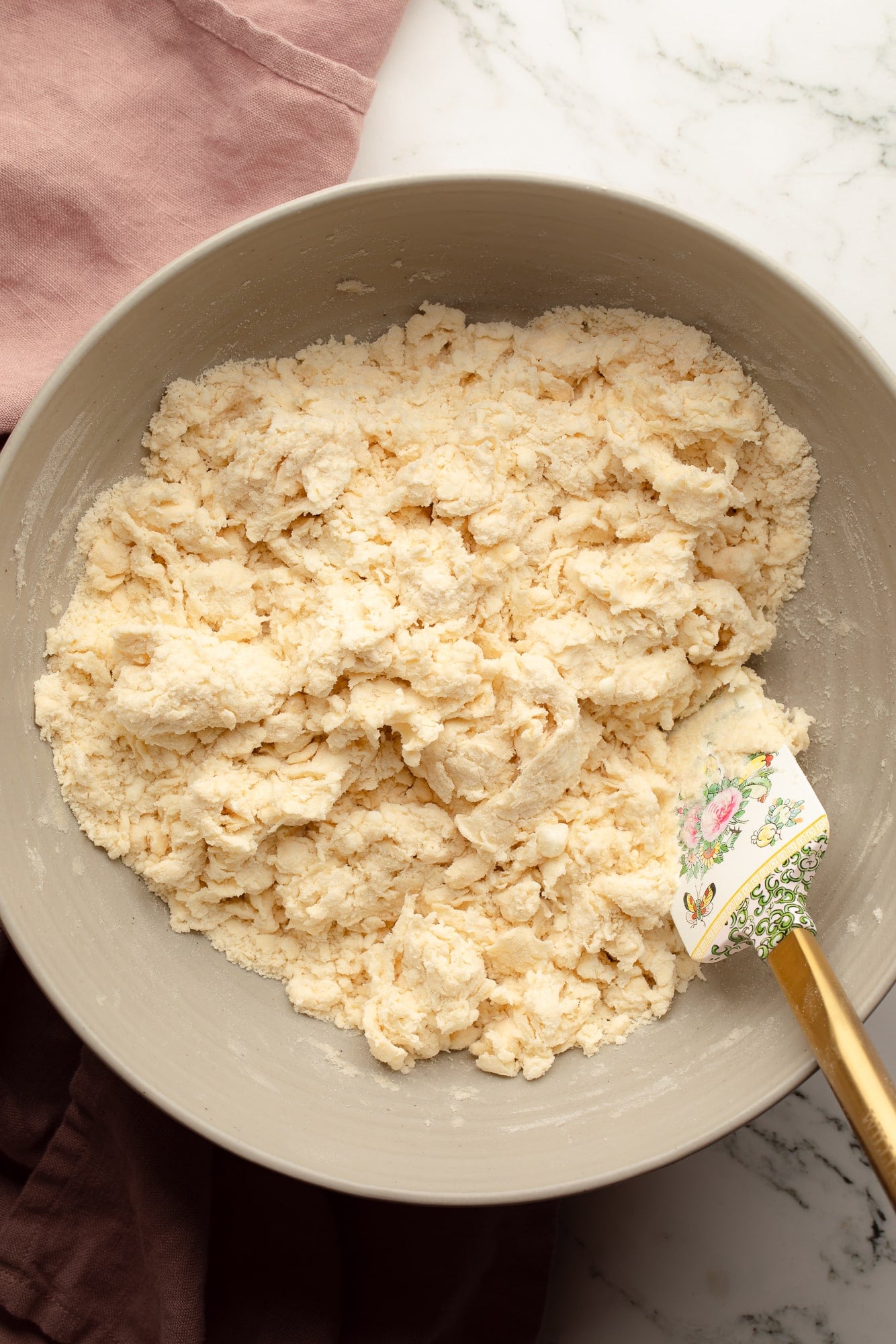
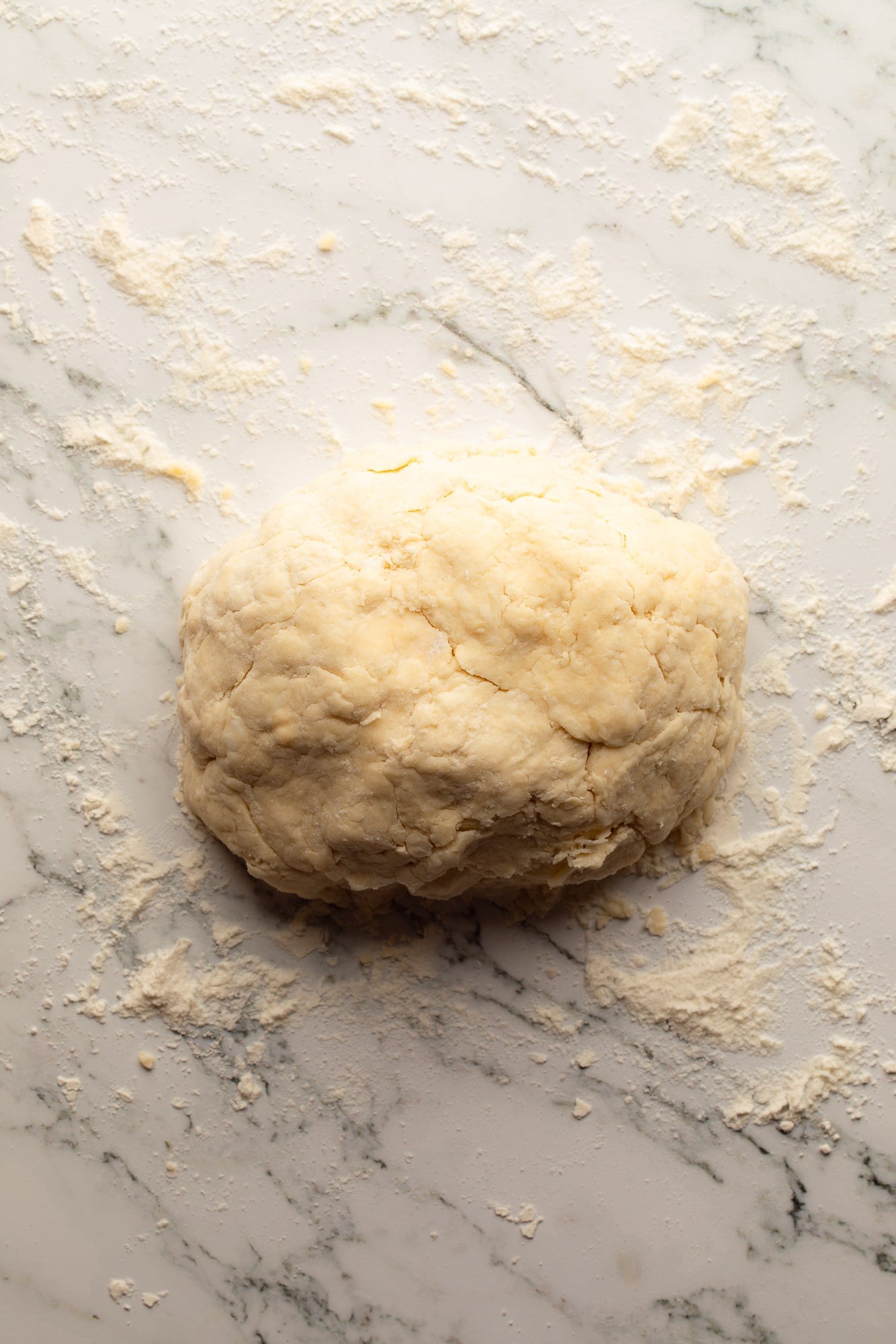
Dump the dough onto a lightly floured surface and carefully shape it into a ball. Refrigerate for 2 hours (unless you’re ready to use it right away).
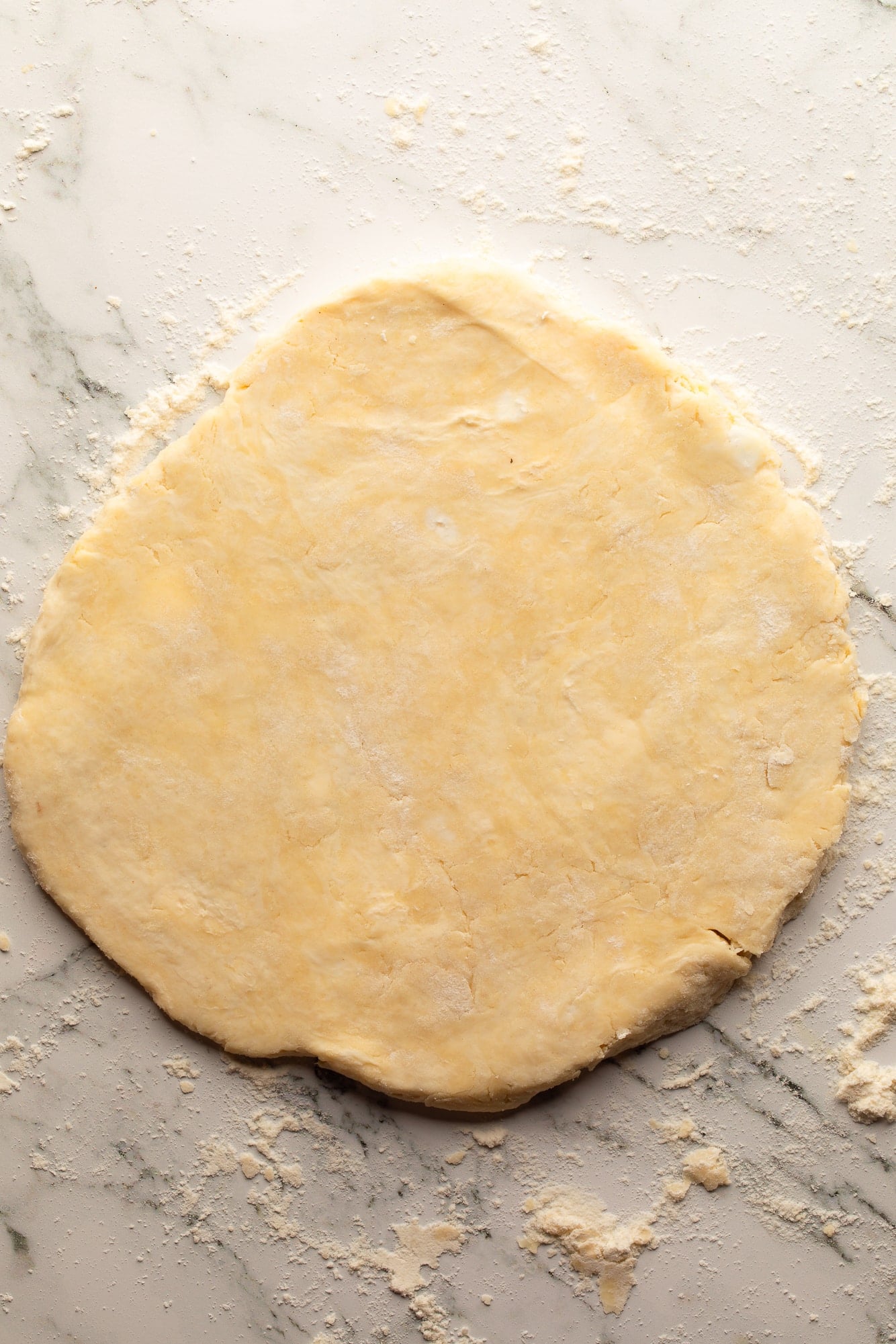
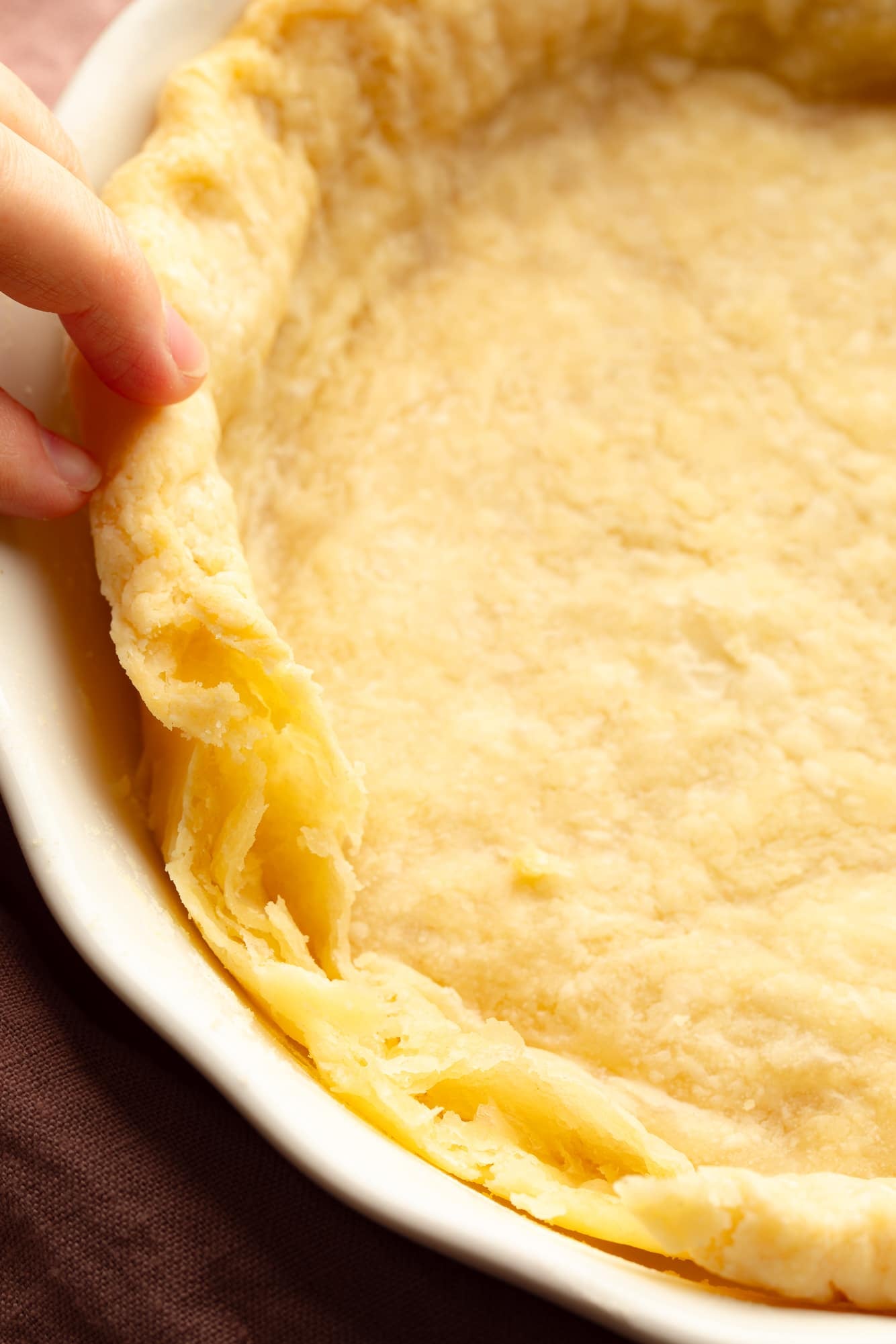
Next, roll the dough into a circle using a rolling pin. Gently wrap the dough around the rolling pin before carefully transferring it to a pie plate. Trim and crimp the edges.
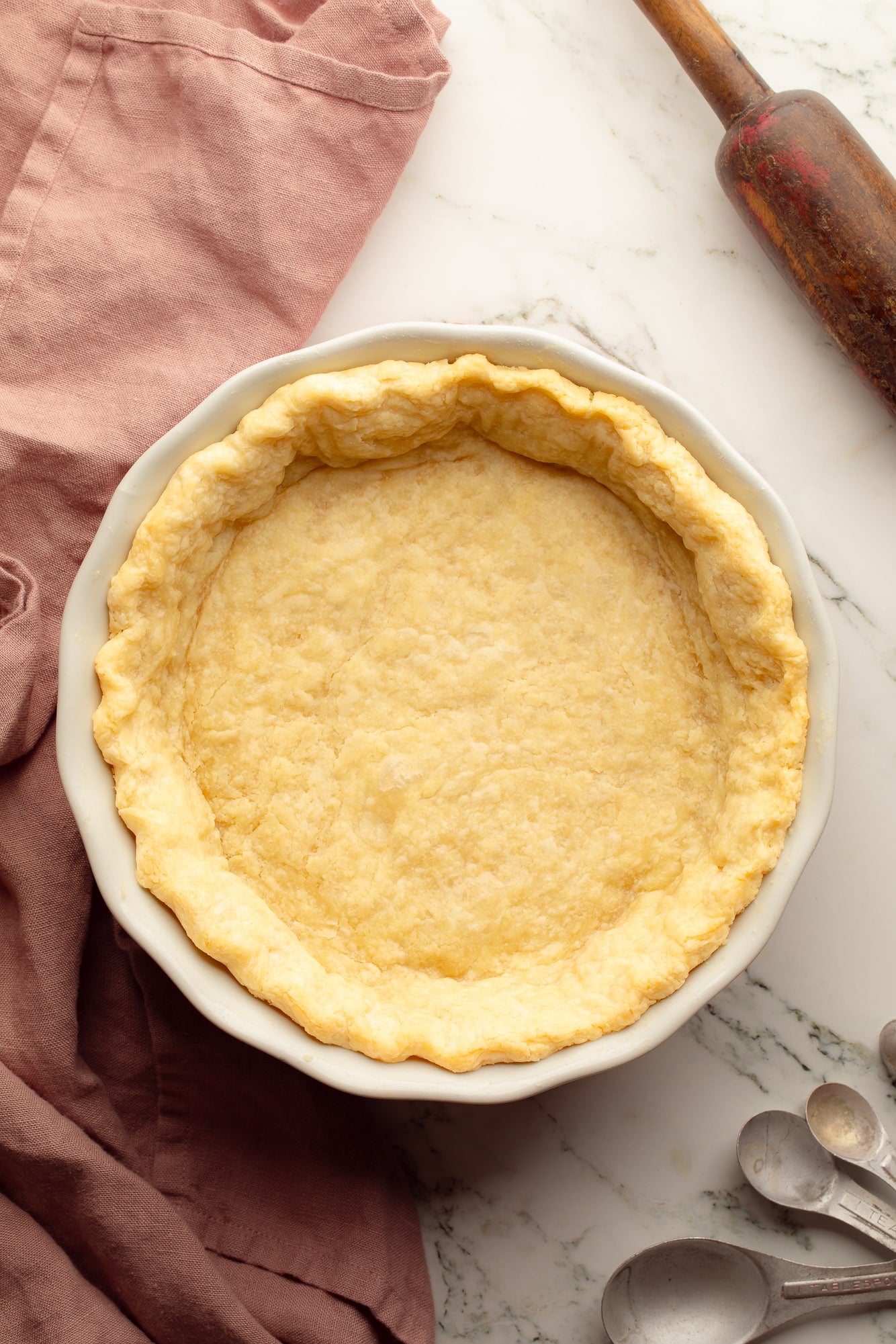
When you’re ready to bake, line the crust with parchment paper or aluminum foil and fill with pie weights. Bake until golden.
The baking time depends on your pie
- For a high-moisture pie that will cook further in the oven (like my Vegan Strawberry Pie), pre-bake the crust for 15 minutes.
- For no-bake filling pies (like my Vegan Chocolate Pie), bake for 15 minutes with the pie weights, then carefully remove them and continue baking for 15 more minutes until golden. Cool fully before filling.
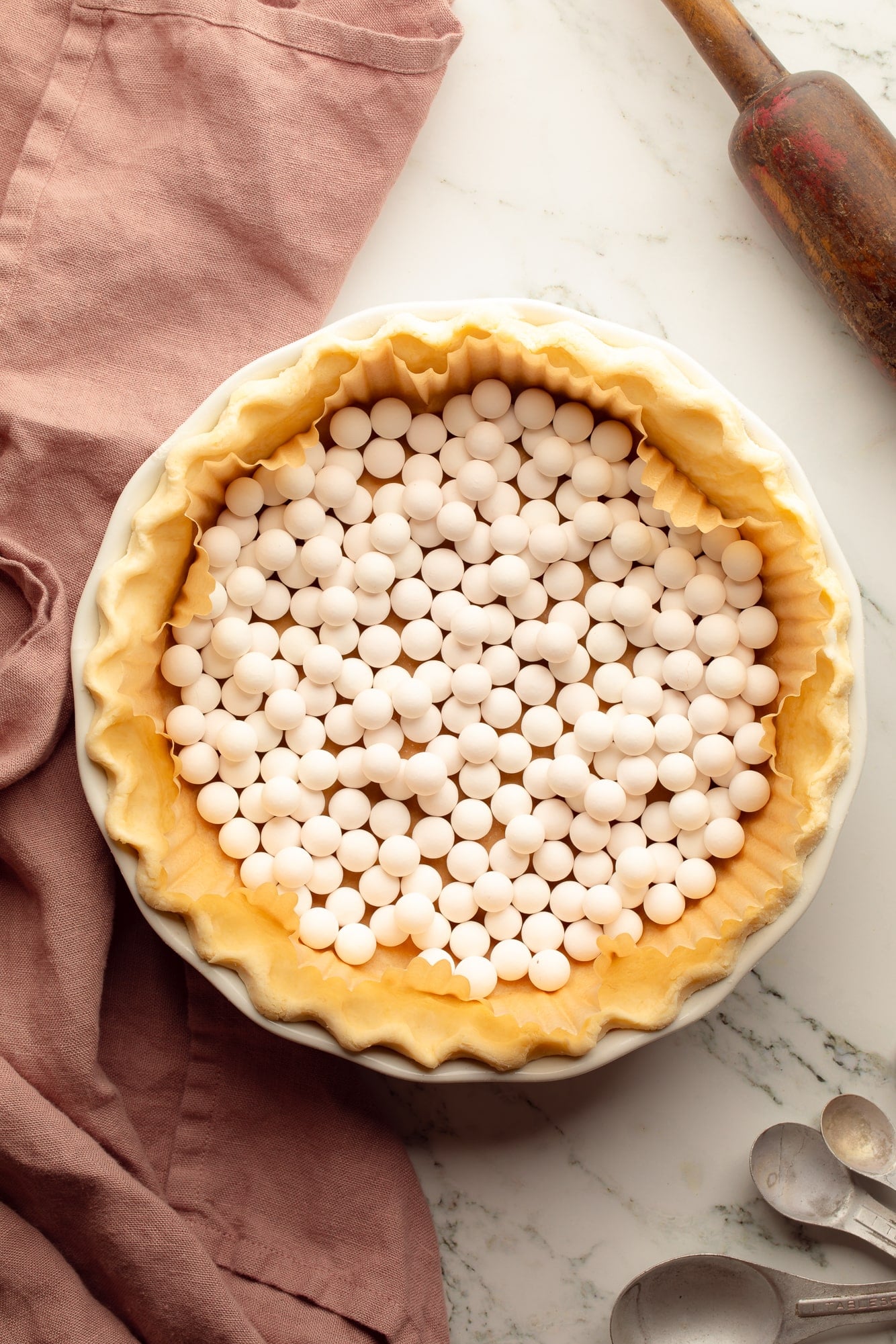
Fill the pie crust according to the pie recipe you’re following, then enjoy!
Helpful recipe tips
- Try to use both vegan butter and shortening. The vegan butter adds a buttery flavor, the shortening helps the structure of the crust, and together, they make the crust more pliable and easy to work with. Also, shortening has a very high melting point, which helps yield a flakier pie crust.
- If the dough is crumbly when shaping it into a ball, dip your finger in the ice water and keep shaping until it comes together. If the dough feels sticky, sprinkle a little flour on top and continue shaping until it forms into a ball.
- Once it’s in the pie pan, trim the edges with kitchen scissors. Always leave a 1-inch overhang so you can crimp or flute the crust. This fluting, crimping, and latticing tutorial from Sally’s Baking will show you how it’s done!
- Freeze the pie crust in the pie plate for 30 minutes before baking. This will keep it from shrinking in the oven.
- If you don’t have pie weights, fill the crust with sugar, dried beans, or rice.
Frequently asked questions
I prefer to make it by hand because it gives me more control and it’s easier to avoid adding too much ice water by accident, which can make the crust tough. The food processor does work well, though! Follow the instructions in the recipe card below, being careful not to add too much ice water.
This heavily depends on the humidity/dryness of the weather and the type and brand of flour. Only add 1 to 2 tablespoons of ice water at a time until the dough clumps together when pinched between your fingers. It should never feel super sticky and wet.
You can, but the crust won’t be as reliable or flaky, and it may sink while baking. I recommend the Earth Balance brand of vegan butter sticks if possible, as they’re generally reliable to bake with. Other brands like Country Crock and Melt work as well.
Check out my Gluten-Free, Vegan, and Oil-Free Pie Crust made with almond flour.
Sure. Gently flatten the ball of dough into a disc, wrap it in a layer of plastic wrap and/or foil, and refrigerate for up to 3 days or freeze for up to 3 months. Thaw the dough in the refrigerator overnight and gently roll it into a circle as normal.
Easy Vegan Pie Crust
Ingredients
- 1 1/2 cups all purpose flour spooned and leveled
- 1 teaspoon sugar
- 1/4 teaspoon salt
- 1/4 cup vegan butter, cold and sliced or cubed sticks preferred
- 1/4 cup vegetable shortening, cold and cut into a few pieces
- 3-6 tablespoons ice water
Instructions
- Chill your butter/shortening: Make sure your vegan butter and shortening are very cold before starting. It's best to place the sliced vegan butter in the freezer for 15-30 minutes and refrigerate the shortening for at least 30 minutes before starting the dough.
- Mix dry ingredients: Whisk the flour, sugar, and salt in a large bowl.
- Cut in the butter/shortening: Add the cold vegan butter and shortening to the dry ingredients. Use a pastry cutter (or two forks) to cut the fats into the the mixture until it resembles coarse meal. Most of the fats should be broken up, but a few larger pieces are okay.
- Add ice water: Drizzle in a tablespoon or two of ice water at a time, stirring with a wooden spoon or rubber spatula between every addition. Add only enough until the dough clumps together, but it will still look quite shaggy. Do not add more water than you need, or the crust will be tough. The dough shouldn't feel sticky and wet. The amount of water needed depends on how dry it is outside, your flour brand, and more.
- Form into dough on floured surface: Transfer the shaggy dough to a lightly floured surface and smush it together with your hands. It should come together quite easily. If it seems really crumbly and dry, dip a few fingers into the ice water and keep forming the dough. If it gets sticky, sprinkle a little flour on the dough and keep forming into a ball of pie dough. Try not to overwork the dough, as the fats will warm and it won't be as flaky.
- Form into a disc and chill: Flatten the dough into a 1-inch disc, wrap in plastic wrap and refrigerate for 2 hours, if possible, or up to 5 days. If you're in a hurry, you can continue with rolling the dough immediately.
- Roll and place in pie plate: Roll the dough on a lightly floured surface with a rolling pin to about a 12-inch circle, and transfer to a pie plate. I usually wrap it gently around my rolling pin and then carefully transfer it. Don't panic if it's not perfect, you can fix it in the pie plate!
- Trim and flute, if desired: Gently push the pie crust all around the dish, trimming off any excess using kitchen scissors and replacing any spots that need repair. See this tutorial for fluting the edges and making other special pie edges.
- It’s now ready to use immediately, or refrigerate until you are ready to use. Simply double the recipe for 2 pie crusts (top and bottom).
How to pre-bake a pie crust
- For a recipe that calls for a pre-baked pie crust, follow these instructions. If possible, freeze the pie crust lined in the pie plate for 30 minutes. This will help it not shrink down when it bakes.
- Preheat the oven to 350 degrees F. Once the crust has been frozen for 30 minutes, line it with aluminum foil or parchment paper (foil is easier to work with). Fill the crust to the top with sugar, or dried beans, pie weights or rice.
- Place in the oven and bake for 15 minutes for a pie that will cook further in the oven. For no-bake filling pies, bake for 15 minutes with the pie weights, then carefully remove them and bake the crust for 15 more minutes, until golden. Cool before filling.
- Instructions for baking pie crust will depend on the pie's specific recipe, but these are general instructions for pre-baking pie crust.
Notes
- Freeze: Pie crust dough can be frozen for 2-3 months, either in disc form, or lined in a pie plate.
- Make ahead – After making the dough, roll into a ball or shape into a patty and wrap well in plastic wrap or other food wrap. Refrigerate for up to 3 days or place in the freezer for up to 3 months (if going in the freezer, also place in a freezer bag or container). Make sure to let the dough come to room temperature before rolling out so that it doesn’t crumble.
- Food processor method – After many years making pie crust, I much prefer to make it by hand in a bowl. But you can use a food processor if you’d like. Add the dry ingredients to a food processor and pulse to combine. Then add the cold butter and shortening, and process until it looks like coarse meal. Drizzle in ice water, 1-2 tbs at a time, while the processor is running. When it begins to clump together, stop. Then continue with the instructions of shaping the dough on a floured surface.


















Can you use 1/2 cup of vegan butter instead of vegetable shortening?
Thank you!
Yes, you can, it just may not be as flaky or stable to work with.
Can you recommend a brand of vegetable shortening?
I use Spectrum brand, which is available at grocery stores near me. Any brand should work fine though!
I can’t find the regular earth balance butter this time so am using becel unsalted vegan butter. Should I adjust the salt in the recipe at all or should it be fine?
I would add a little extra pinch of salt if using unsalted vegan butter, yes. It should work just fine though. Enjoy!
I made a samosa pie with this pastry. This recipe is brilliant! Thanks so much for your delicious recipes.
Hi Debra. What a great idea for using this pie crust recipe! Thank you for sharing your great idea and recipe feedback! I appreciate your support, and wish you lots of happy cooking!
This crust turned out even better than my all butter crust from my pre-vegan days! However, my first batch was so gloopy with three tablespoons of ice water that I had to throw it out. On my next attempt I used only one tablespoon and it was still quite difficult to get it to hold together. I had to roll it out twice (it totally fell apart when transferring to the pan the first time) and was scared I’d ruined it but the texture once baked was perfect. Not sure why I needed so much less water but would recommend adding it slowly to make sure you don’t add too much.
It worked fantastically for me. I wanted an option that was low in gluten so I used half regular wheat flour and half roce flour and it turned out great. I used it for apple pie and will certainly try it for pumpkin pie too 🙂
I’m so glad that the pie crust turned out fantastic for you! Thank you for sharing your recipe experience and fantastic review! Happy baking!
Great recipe all my family loved it
I made this crust with Pillsbury gluten free flour. It turned out gritty. Is there a way to avoid the grittiness?
Probably using a different flour is your best bet. Some gluten free flours are gritty. I love King Arthur’s Measure for Measure for less grit, or Better Batter if you can get it.
feels kind of unfair to give a recipe 3 stars if you used a different flour than what the recipe asked for
Hey Sharleen, I hope you’re well. I think it may be a little not nice to leave a 3-star review when you changed the recipe, it’s not Nora’s fault. Perhaps you didn’t do it on purpose, though. Would you consider changing this? ❤️ Hope you are well. 😊
I need to make a pie crust for vegan and non-vegan. Can I use just shortening instead of vegan butter?
You could, yes. It will have a different flavor, and I would personally miss the buttery flavor, but technically it will work.
Hi Nora,
I’m interested in making your quiche recipe but I’m wondering if its possible to use a pressed baked potato crust in this recipe?
Thank you!
I’ve never tried it, but you can experiment! Sounds interesting.
Hi Nora. Love your stuff! ~ I’m about to make this for your pecan pie recipe. Is there a work around the shortening? I never ever use it. Can I just double the vegan butter?
Hi Chris. Thank you for the recipe love! Yes, all butter will work. I often use all vegan butter these days for my pie crust and it works so well! I always forget to buy shortening! Happy cooking!
Can you tell me what brand Vegan Butter you prefer for this recipe. Thank you!
I prefer Earth Balance sticks, but I regularly use and love Country Crock too. Other brands will work as well, such as Melt, Miyoko’s, etc.
Normally I am a super fan of Nora but this recipe did not come out for me. Tried a bit of extra ice water as suggested in the comments but it became a crumbly mess that I just tried to patch together as best I could. Everything was done as per the instructions. I assume it’ll still taste good but I was not able to transfer the pie crust without it falling apart. I’ve made your gluten free pie crust without any issues but this one just didn’t work sadly.
Hi Mandi! So pie crust can be a little tricky, but this is a very standard recipe. Pie crust need varying amounts of water due to humidity, flour type (and protein levels) and the fat (type of vegan butter or shortening). So you really do need to add ice water gradually until the dough JUST holds together when squeezed. This is how to avoid cracking or crumbly dough, while getting a flaky pie crust. If you add too much water, the crust won’t be flaky. Unfortunately, I can’t give an exact measurement of water needed, since it changes every time you make it. It has to be done by feel. It definitely sounds like your pie crust needed a bit more ice water. I hope this well help you out next time you attempt any traditional pie crust recipe. Thanks!
Sounds like user error, not the recipe.